LONDON, UK
by: Rod & Melody, Always Be Vacationing
We are not people who travel for a living. We have full-time jobs, schedules that don't bend easily, and a travel calendar that we protect like it's a second mortgage. Every quarter we find a window, and we make the most of it. If a British Isles sailing is anywhere on your list, stick around. British Isles Playlist.
What's in front of you took real planning to put together. Melody spent hours on this before we left — researching neighborhoods, reading the reviews nobody else was reading, and building the itinerary in Wanderlog so she could map it day by day and make sure we weren't zigzagging across the city wasting half our time on the Tube. She divided London into zones and routed each day so that one stop led naturally to the next. That's the reason this itinerary works as well as it does.
Here's how three days in London went.
The Itinerary at a Glance
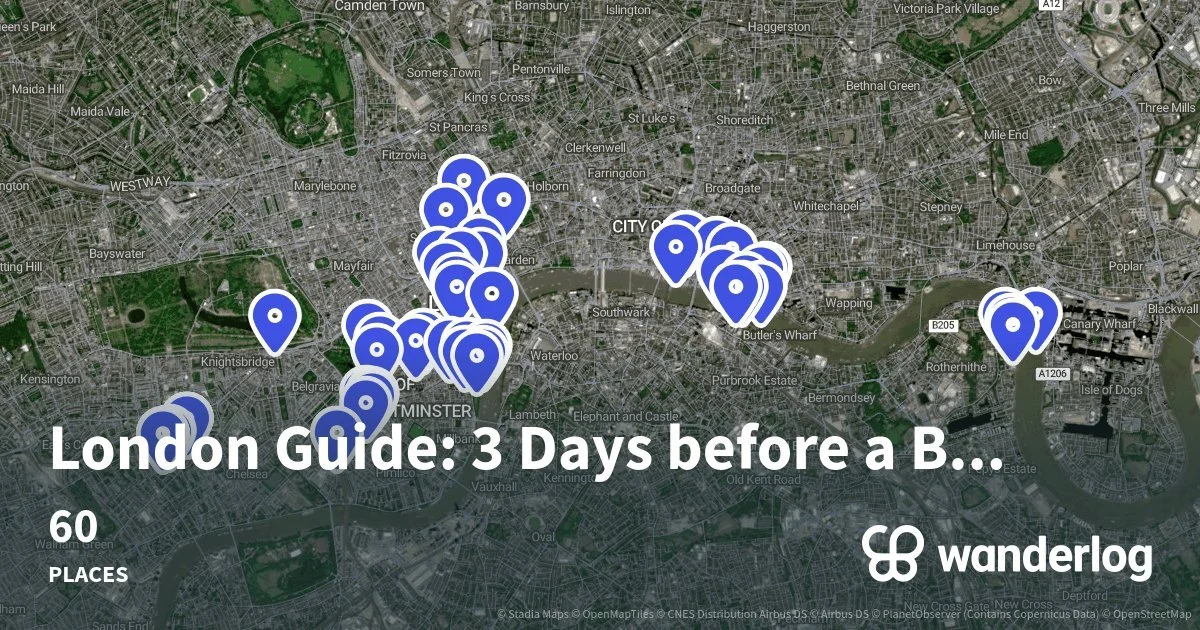
60 places in 3 days
• Day 1: South Kensington → Afternoon Tea → Buckingham Palace → Royal Parks → Westminster → Uber Boat by Thames Clipper → Canary Wharf & the Docklands → Fish & Chips at the Blacksmith Arms
• Day 2: Tower of London → PAUL Le Café Three Quays → St Dunstan in the East → Garden at 120 → British Museum
• Day 3: Covent Garden → Chinatown → Leicester Square → Trafalgar Square → National Gallery → Hamilton at the Victoria Palace Theatre
Before You Leave Home
Sort Your Phone Plan in Advance
This is the first thing on the pre-trip list, before you think about packing. Landing in a foreign country without a working data plan is the kind of friction that turns a great first day into an annoying one. Download your eSIM before you leave home. There's no queuing at a phone kiosk, no hunting for a SIM card at the airport, no roaming charges quietly stacking up in the background.
We tested two options on this trip and our recommendation is Holafly — not because of any sponsorship, but because it's what we actually used and it held up. The reason it makes particular sense for a trip like this one is coverage. A single Holafly plan covers the UK, France, Ireland, Scotland, and most of Europe, so if your journey extends past London there's nothing to sort at the border.
Download Citymapper Before You Land

Citymapper is a free app and it's the difference between navigating London with confidence and standing in the middle of a busy station staring at the Tube map trying to figure out which platform you need. It tells you which line, which direction, how many stops, which exit to use, and which carriage to board so you're already in position when you arrive. It will also tell you whether the Tube, bus, taxi, or just walking is the smarter call for any given journey. Download it at home while you're on WiFi so it's ready before you land.
Know Your Payment Options for the Tube
This is worth understanding before you get to London because the wrong choice can cost you more than it should. Here's the straightforward version:
Tap your US card directly. The fares and daily cap are the same as an Oyster card, and it works at every Tube barrier, bus reader, and the Thames Clipper pier. The catch: if your card charges foreign transaction fees — typically 1 to 3 percent per transaction — those add up quickly across three days of tapping in and out. Check your card terms before you travel.
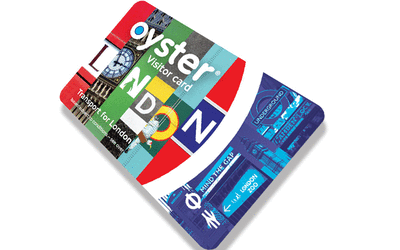
A prepaid smart card designed for tourists that works across all Transport for London services — Tube, bus, DLR, Elizabeth Line, London Overground, and most National Rail services within London. No foreign transaction fees, guaranteed acceptance, and it comes with discounts at a handful of London attractions. The practical downside: as of September 2025, the activation fee is £10 and is non-refundable. Order it in advance through the TfL Visitor Shop before you travel.
Get a no-foreign-fee card before you go.If you don't already have one, this is the trip to get one. The Charles Schwab Bank Visa Platinum Debit Card is what the travel community consistently recommends — no foreign transaction fees, no currency conversion fees, and it reimburses ATM fees charged by international banks worldwide at the end of each month. No annual fee, no minimum balance. If you'd rather have a travel credit card, the Chase Sapphire Preferred and Capital One Venture are both strong options with no foreign transaction fees and useful travel rewards programs.
Short version: if your current US card charges foreign transaction fees, either get the Visitor Oyster card or sort a no-fee card before you fly. If you already have a no-fee card, tap it directly at the barriers and don't think about it again.
Day One: South Kensington, the Royal Parks & the Thames
Getting in from Heathrow
We flew into Heathrow and took the Piccadilly Line straight in — no taxis, no pre-arranged transfers. The line runs directly from Heathrow to Gloucester Road Station in South Kensington, which is a five-minute walk from the hotel. Tap your contactless card at the barrier when you get on and again when you get off. The journey runs around 45 minutes depending on traffic and time of day. It's the easiest airport-to-hotel journey we've had in Europe.
Where We Stayed: 100 Queen's Gate, South Kensington
Address: 100 Queen's Gate, London SW7 5AG | Hilton Curio Collection
Choosing South Kensington as your base is one of the best calls you can make for a trip like this. The Natural History Museum, Hyde Park, and the Royal Albert Hall are all within walking distance. Two Underground stations — Gloucester Road and South Kensington — sit within five minutes of the front door, between them covering the Circle, District, and Piccadilly Lines. Restaurants, a pharmacy, coffee shops, and a pastry spot are all steps away. It's the kind of neighborhood that handles itself.
The building has a history that goes back to 1870, when it was constructed as the private home of Victorian aristocrat William Alexander. It was converted from seven Victorian townhouses — which is why every room is individually designed with no two sharing the same layout. The glass curio cabinets throughout the property hold William Alexander's personal collection: foreign stamp collections, Victorian medical instruments, and relics from his travels. It gives the hotel a character that you either walk past without noticing or find yourself stopping in front of repeatedly.
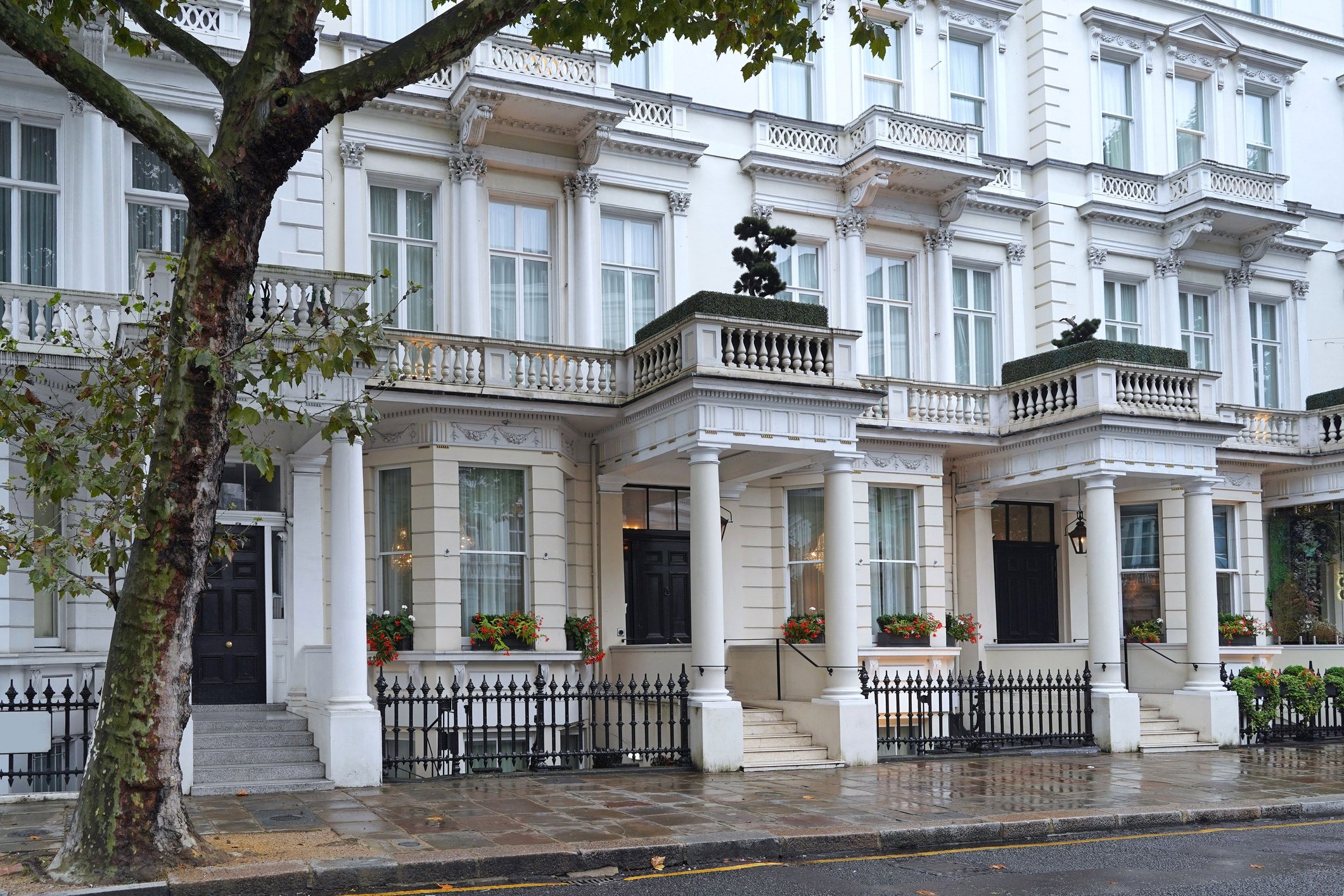
The hotel joined Hilton as a DoubleTree in December 2015 and was elevated into the Curio Collection in March 2019. We stayed in Room 140, a Deluxe Atrium Queen Room — more space than we expected for a European hotel, with a seating area, desk, coffee maker, and a teapot, because we were in England. The suites are named after historical figures: Alexander Fleming, Agatha Christie, A.A. Milne. At the top end, the Queen's Gate Suite has four bedrooms, its own street entrance, a private living and dining space, and secure video entry. Room options and availability are linked below.
Tip: Don't bank on early check-in after a long transatlantic flight — it's rarely complimentary and never guaranteed. If you booked through a travel agent, have them call ahead and specifically request it. If you booked directly, leave your number at the front desk and they'll text you when the room is ready. We arrived to find ours wasn't ready, freshened up in the lobby bathroom, dropped our bags with the bellman, and walked straight out to afternoon tea. Not a bad way to spend the wait.
Afternoon Tea at Botanica
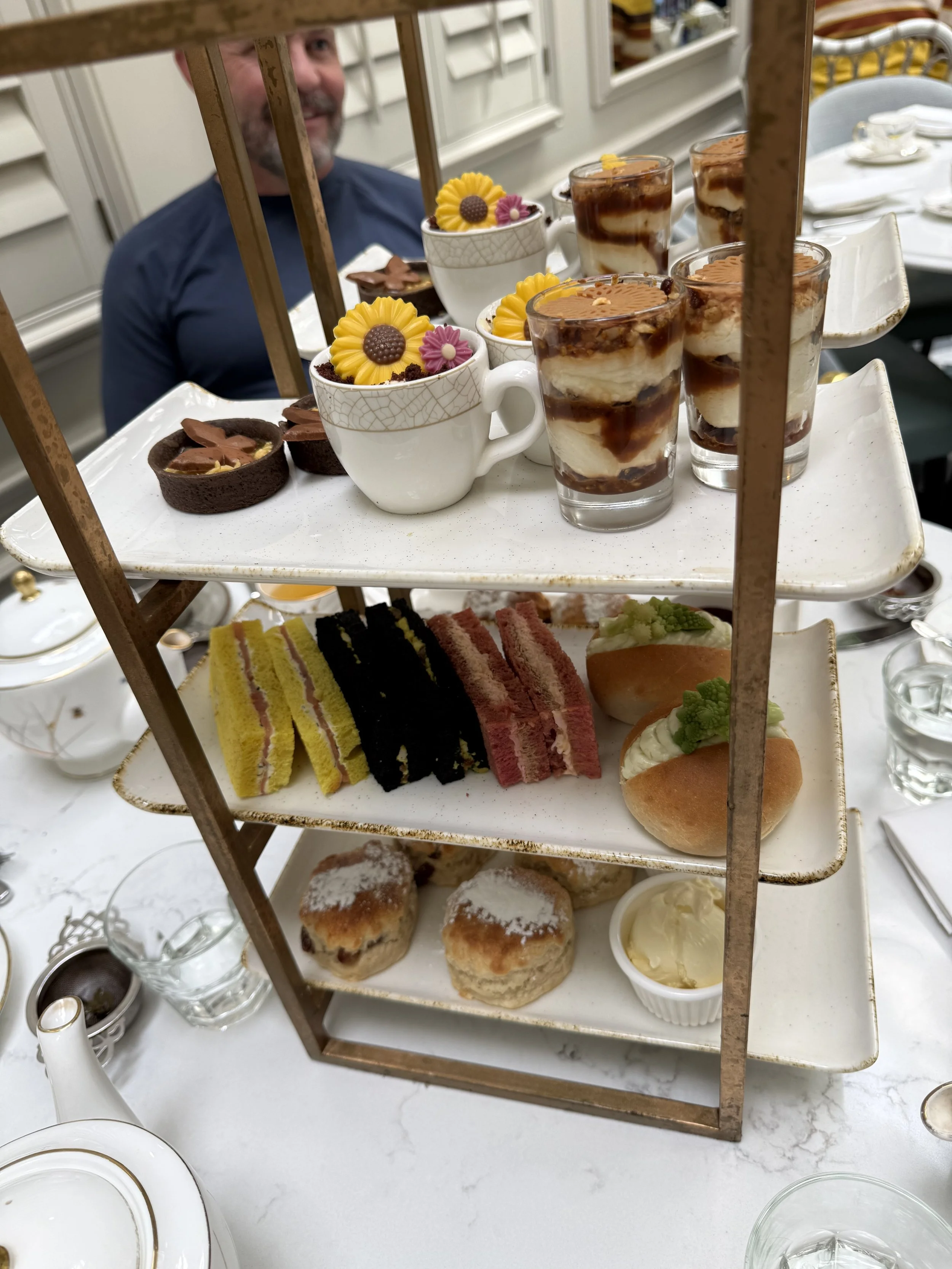
If you're going to do one afternoon tea in London — and you should do one — Botanica at 100 Queen's Gate deserves to be on the shortlist. The restaurant sits inside a botanical glasshouse attached to the hotel, with tall glass walls, trailing greenery, and the kind of natural light that makes everything look better than it already is. We arrived early enough to have it to ourselves for a while, which made the whole experience.
Afternoon tea has a longer history than most people realize. It was invented around 1840 by Anna, the 7th Duchess of Bedford, who found herself hungry between lunch and dinner and started requesting tea and snacks to be sent to her room in the afternoon. What started as a personal solution to a mid-afternoon problem became a national ritual. The British drink around 100 million cups of tea a day as a nation — and an afternoon at Botanica makes that number easy to believe.
The spread comes out on a tiered stand: finger sandwiches on the bottom, freshly baked scones in the middle, pastries and sweets on top. The tea selection leans into the botanical theme, with house-infused blends alongside the classics. And we have to ask: cream first or jam first on your scone? Devon says cream first, Cornwall says jam first, and the debate has been running for centuries with no sign of resolution. The clotted cream is essentially a rich, dense butter. Drop your answer in the comments — we're genuinely curious where people land on this one.
Book in advance whether you're staying at the hotel or just visiting. They're accommodating about timing — we'd booked for later in the afternoon and they got us in earlier without any issue.
Buckingham Palace & the Royal Parks Walk
We took the Tube from South Kensington to Victoria and set off on foot from there. The walk covers some of the most historically layered ground in London and it connects naturally from one stop to the next without a lot of doubling back — which is exactly the kind of routing the zone planning was designed to find.
Buckingham Palace has been the official London residence of the British monarch since 1837. At 775 rooms it's one of the largest working royal palaces in the world, and standing at the gates on Spur Road and looking at the scale of it up close is a different experience than any photograph manages to convey.
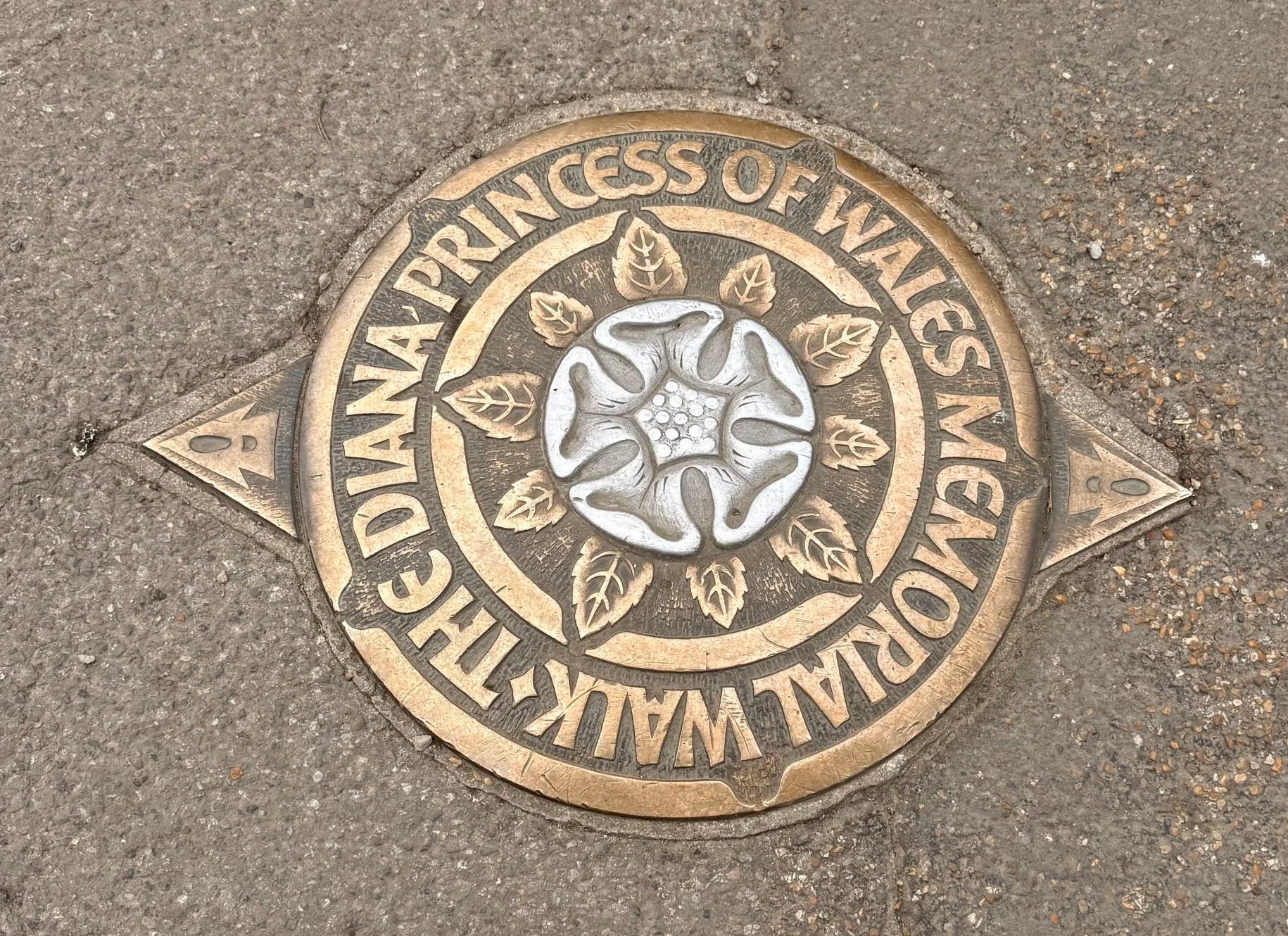
From the palace, the route moves to Canada Gate — the ornate gold and iron ceremonial entrance to Green Park — and from there into St. James's Park, which has been a royal park since the reign of Henry VIII. Both parks are beautiful walking, and if you pay attention to the pavement underfoot as you go, you'll start noticing something worth knowing about.
Tip — The Princess Diana Memorial Walk:The path through Green Park and St. James's Park forms part of the Princess Diana Memorial Walk — a 7-mile circular route through four royal parks that passes Kensington Palace, Spencer House, Clarence House, and Buckingham Palace. The route is marked by small circular silver plaques embedded directly into the pavement. Most people walk straight over them. Now you know to look for them.
The Blue Bridge at the center of St. James's Park is one of the most photographed spots in the city for good reason. The view across the lake toward the London skyline earns the reputation.
Westminster: Parliament Street, the Telephone Boxes & Big Ben
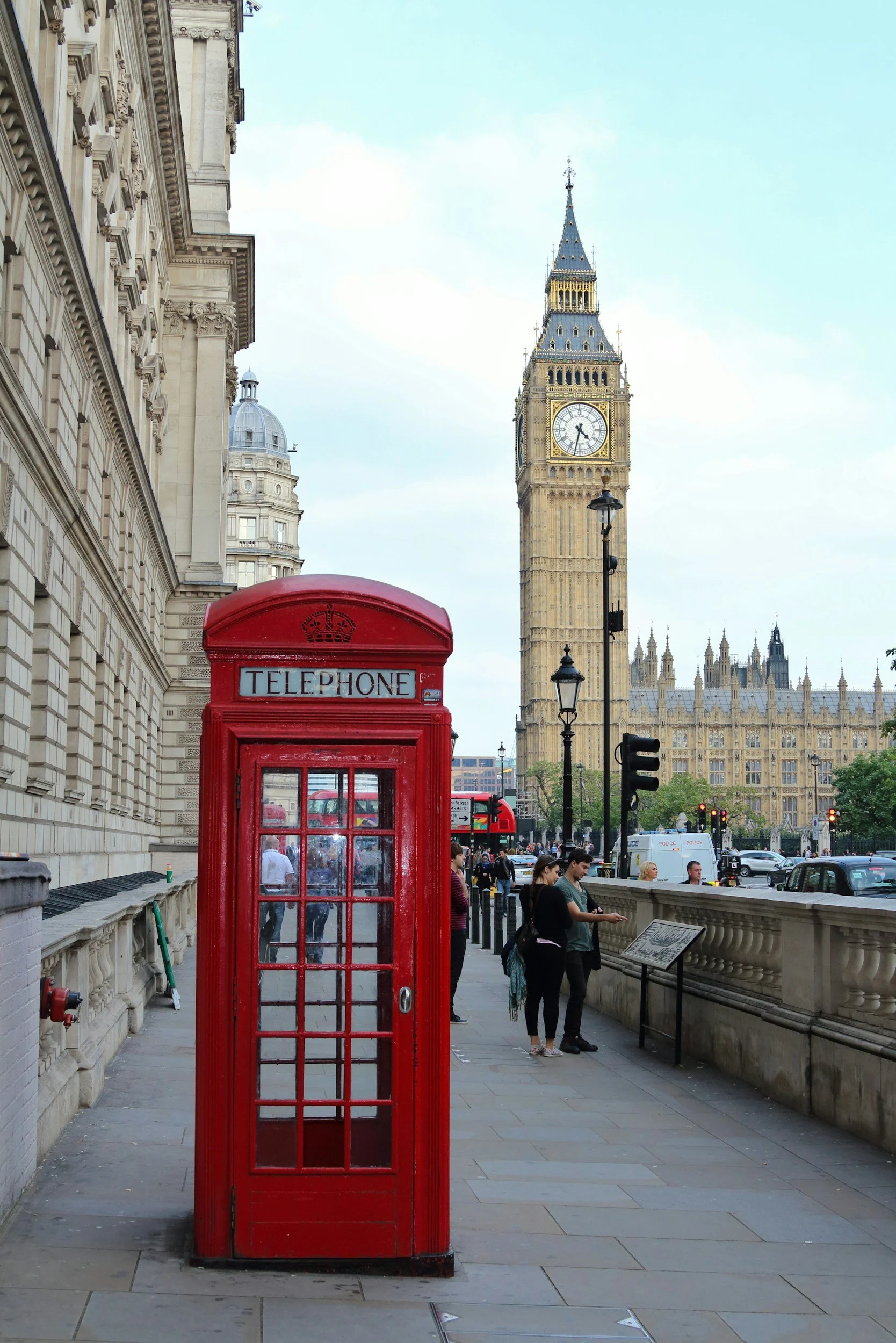
Continuing along King Charles Street and through the gate onto Parliament Street, you'll start seeing the red telephone boxes that have become one of Britain's most recognized symbols. The classic K2 design was created by architect Sir Giles Gilbert Scott in 1926 — at their peak there were over 70,000 of them across the country. Most have been decommissioned and given new lives as free community libraries, coffee kiosks, and defibrillator stations. You'll spot them all over London throughout the trip, but this stretch near Parliament puts you directly in front of one with Westminster as the backdrop.
Around the corner, Westminster Abbey and the Elizabeth Tower come into view together — and it lands differently in person than in photos, every time. What most people call Big Ben is the Elizabeth Tower, renamed in 2012 to mark Queen Elizabeth II's Diamond Jubilee. Big Ben is technically the 13-tonne bell housed inside it. The tower stands 96 meters tall with clock faces 7 meters in diameter and minute hands over 4 meters long, and it has been keeping time since 1859. The Houses of Parliament stretch out alongside it, and the Thames runs just beyond. It's one of those views that earns its place on every list.
Pickpocket Warning: Westminster is one of the most heavily pickpocketed areas in London. Bag to the front, zipped up. The crowds around the telephone boxes and the Elizabeth Tower are exactly the kind of cover that makes this a working spot for pickpockets. Keep your head up.
The Uber Boat by Thames Clipper
Tip: No advance booking needed for the Thames Clipper. Tap your bank card, Apple Watch, or Apple Pay directly at the pier terminal when you arrive.
At Westminster Pier, the Uber Boat by Thames Clipper is the river bus that most visitors walk straight past on their way to the tourist cruise boats. It's a public transit service — not a sightseeing operation — which means the fares are reasonable, the boats run frequently throughout the day, and the route covers the full length of the Thames through central London. Heading east from Westminster you pass the Tate Modern, Shakespeare's Globe, the Shard, HMS Belfast, and Tower Bridge from the water. One practical note: the windows inside the boat aren't always clean, so if you're planning to shoot photos, try to get a spot on the outer deck rather than shooting through the glass. The fare difference between this and a tourist river cruise is significant.
Watch our full Thames Clipper video.
Canary Wharf & the Docklands
Ride the Clipper east to Canary Wharf, then take a short ferry across to the Docklands. Most visitors to London never make it out here, which is reason enough to go.
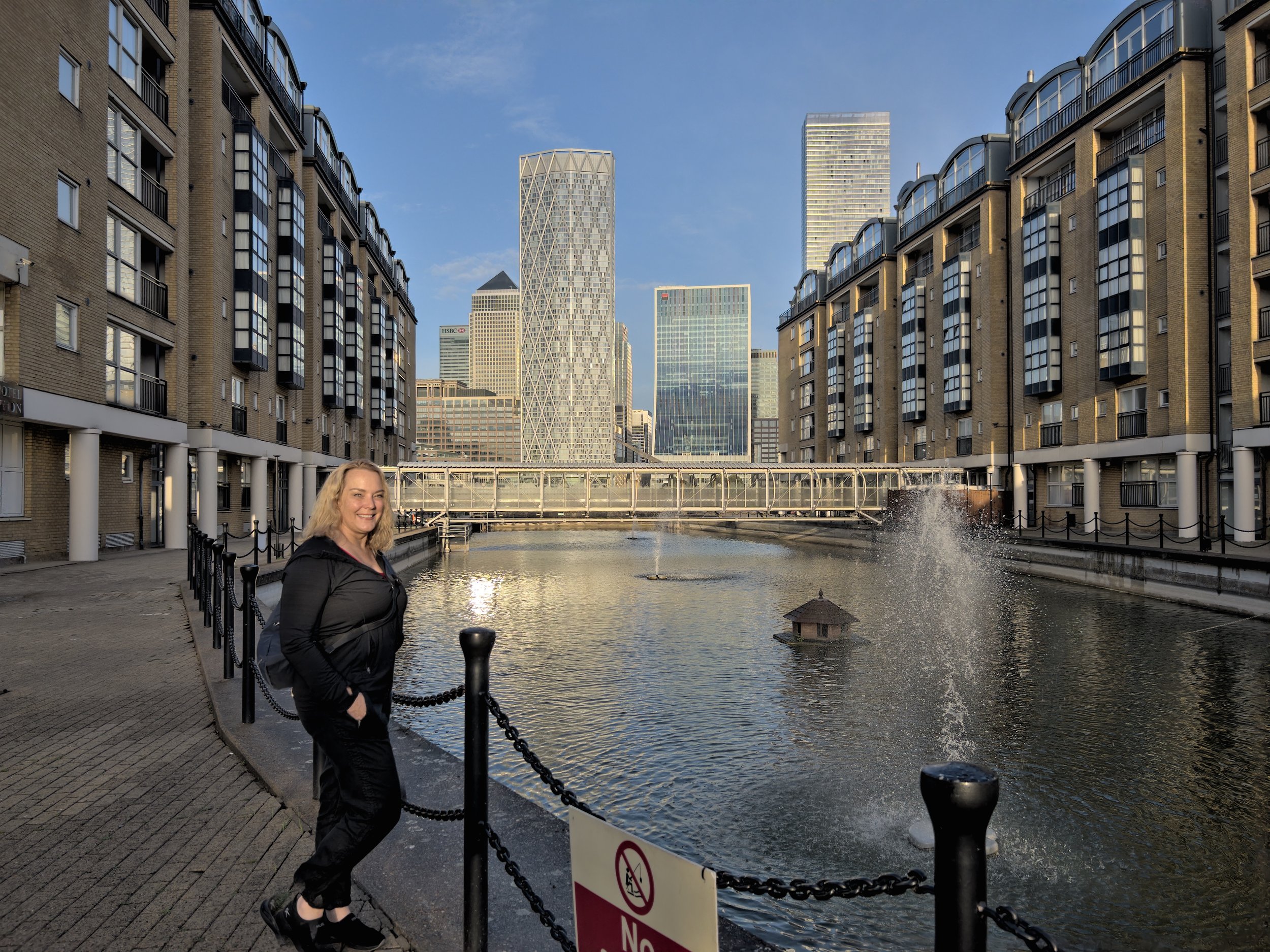
The Docklands spent the 19th and early 20th centuries as the busiest port in the world — the engine of London's trade empire, handling cargo volumes that no other port could match at the time. Decline set in through the 1960s and by the 1980s the area was largely abandoned. What came after was one of the most dramatic urban transformations in British history. Today you walk through glass towers and waterfront restaurants sitting directly alongside original dock walls, rusting cranes, and industrial infrastructure that was never demolished. The contrast between what the area was and what it's become is visible on every block.
Watch our full London Docklands video.
Fish & Chips: The Blacksmith Arms
The best fish and chips of the trip, and we weren't even looking for them — the Blacksmith Arms in the Docklands was simply the right pub at the right moment. Dark wood, worn floors, low ceilings, the particular kind of quiet confidence that a pub develops after decades of feeding its neighborhood without making a fuss about it.
One detail that sets the place apart: running along the base of the bar is a heated foot rail, a feature that's been pulled out of most pubs but survives here in its original form. Dock workers used to come in after a shift, rest their boots on it, and warm up. It tells you something about how long this place has been doing what it does.
The fish was light, crispy, and fresh. Chips thick and golden, garden peas, malt vinegar. It's the meal you come to London hoping to find — unpretentious, perfectly executed, eaten in a pub that's been at it longer than anyone can remember.
Day Two: Tower of London, Hidden London & the British Museum
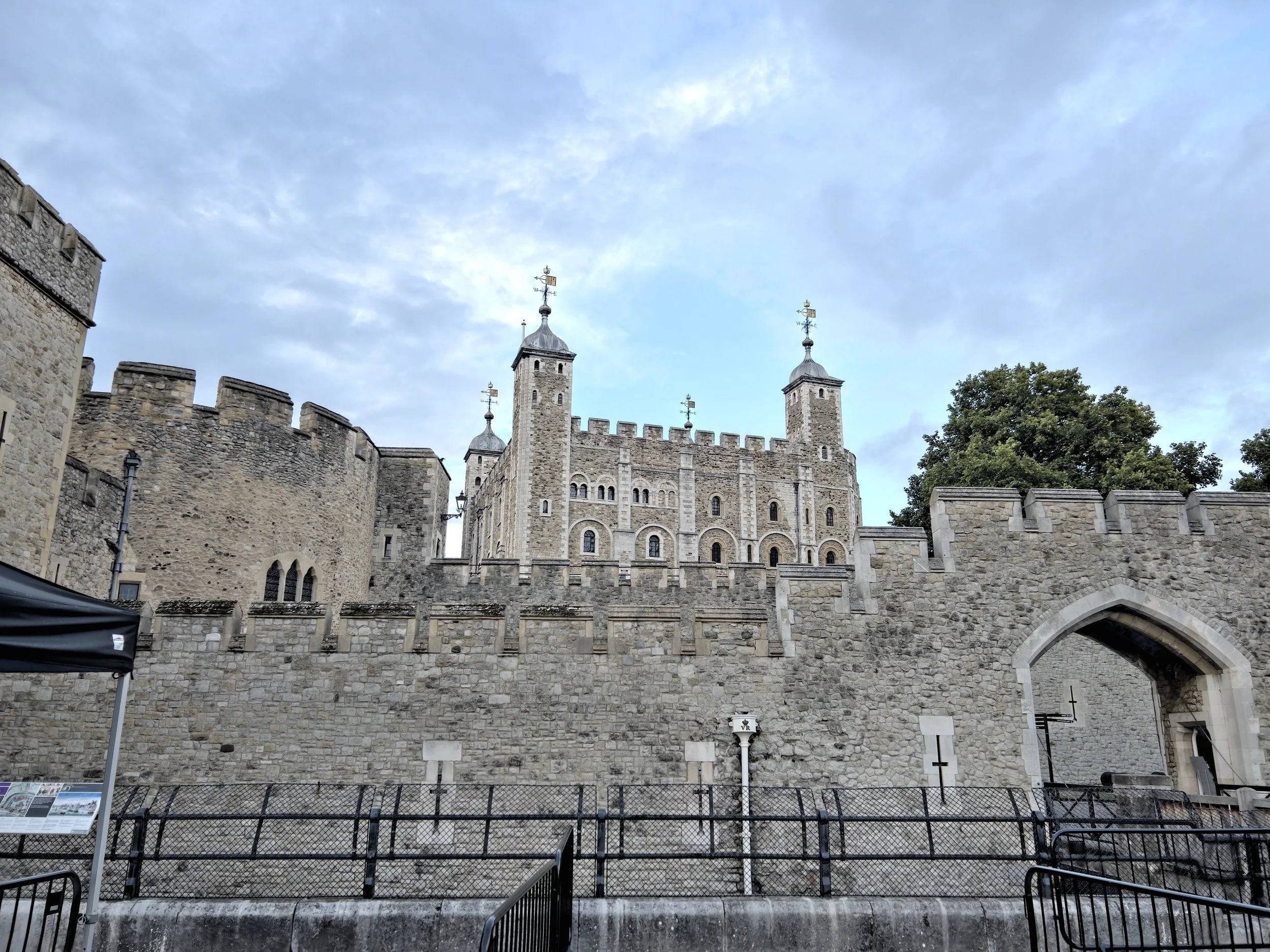
THE TOWER OF LONDON
Tip: Buy your tickets online before the trip. Walk-up queues run long and timed entry slots sell out on busy days. Get there 15 to 30 minutes before opening, coffee in hand, and be ready to move when the gates open. The first 30 minutes set up the rest of the visit.
Over a thousand years of history in a single complex. Founded by William the Conqueror in 1066, the Tower of London has been a royal palace, political prison, royal mint, menagerie, armoury, and the permanent home of the Crown Jewels. It's a UNESCO World Heritage Site and it delivers in a way that justifies every word written about it.
One honest note: while we were in the queue at the front gate, waiting for opening time, the camera went down. Before we even got through the door. We survived. It got considerably better from there. Watch the Video Blooper.
The Most Important Thing: Talk to the Ticket Guard
Every review, every travel guide, every app tells visitors the same thing: turn right when you walk in and go straight to the Crown Jewels. Before we did anything else, we asked the ticket guard what he would do. His answer was to go left — start with the Medieval Palace and the battlements, then come back for the Crown Jewels once the opening rush had moved on.
Here's what that advice produced: we had the Medieval Palace entirely to ourselves. The recreated royal chambers used by Edward I and Henry III, detailed and atmospheric, with nobody else in them. The people who came in with us were packed into the Crown Jewels queue while we were wandering through rooms in complete quiet. By the time we got to the Crown Jewels, the crowd had thinned considerably and we walked straight in.
The lesson we took from this: whatever the reviews tell everyone to do, everyone does. The staff know where the crowd is going on any given morning. Ask them. They'll tell you where not to be.
The Battlements
From the Medieval Palace, the route leads out onto the inner curtain wall. You're walking the same battlements that have been part of this fortress since the 13th century, with Tower Bridge laid out directly in front of you and the Thames below. Along the East Battlements, look for the section covered by a wooden roof structure — it's a recreation of the shelter that protected the garrison from weather and incoming arrows during an attack. Walking the battlements makes the whole place feel less like a preserved museum and more like a fortress that simply never stopped being one.
The White Tower
The oldest structure on the grounds, built by William the Conqueror and standing for nearly a thousand years. The spiral staircases inside are steep, narrow, and uneven underfoot in places — they are medieval stone steps that have been used for centuries. Take your time on them.
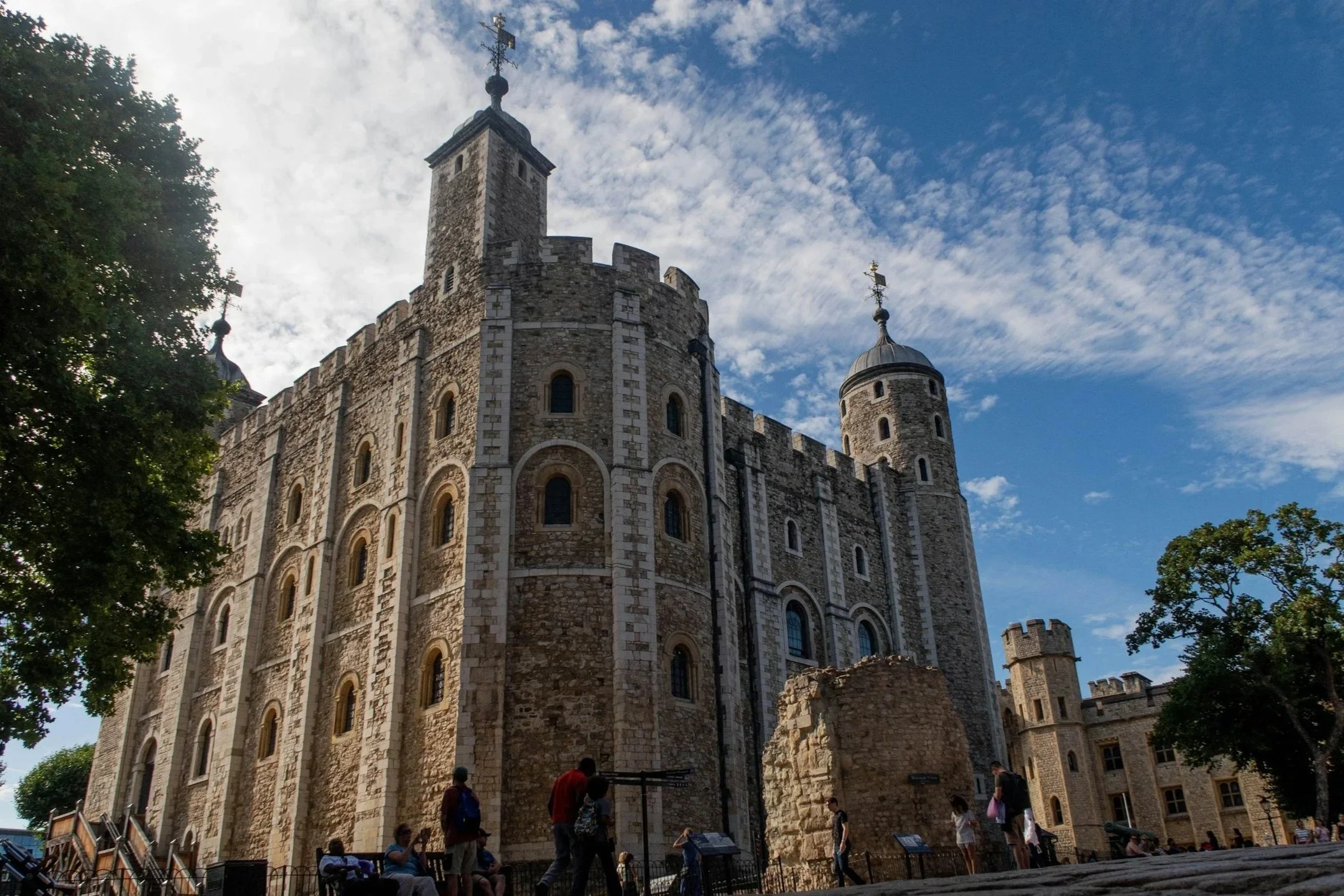
The inner courtyard is patrolled by the Yeoman Warders — the Beefeaters — with the King's Guard standing watch nearby. This courtyard has witnessed coronations, imprisonments, and executions across centuries. Anne Boleyn, Lady Jane Grey, Guy Fawkes — all of them passed through these stones.
The Crown Jewels
Photography isn't permitted inside the vault, so you'll have to see it for yourself. Over 23,000 precious stones set into crowns, orbs, sceptres, and ceremonial regalia used by the British monarchy across centuries. The Koh-i-Noor diamond sits near the end — one of the largest cut diamonds in the world. You move through on a slow conveyor belt, the lighting is dramatic, and you can ride it more than once if you want more time with a particular piece. Because we went left at the start and came here second, we walked in with no queue at all.
The Ravens
Before you leave, find the ravens. Legend holds that if they ever leave the Tower, the Crown and the kingdom will fall. Charles II is credited with formalizing their protection — reportedly over the objections of his Royal Astronomer, who found them disruptive to the observatory he'd set up in the White Tower. There are currently eight ravens in residence, each one named and registered as an official resident of the Tower. You can identify them by the bracelet on their leg. They have the run of the grounds and they know it. They are still wild animals — don't try to get close.
Tip — The Beefeater Tour: Don't leave without doing it. The free Beefeater tour runs every 30 minutes, is led by actual Yeoman Warders who live on the property, and is included with your admission. These are career military personnel — among the most decorated in Britain — and very few earn the appointment of Yeoman Warder. The tours cover a thousand years of history, treason, ghost stories, and genuine wit. Give them the respect they've earned. And don't skip the tour.
Lunch: PAUL Le Café Three Quays
Walk out of the Tower and it's right there — PAUL Le Café Three Quays on Lower Thames Street, sitting beside the Tower Millennium Pier on the bank of the Thames. From the patio you have Tower Bridge, HMS Belfast, the Shard, and City Hall all in front of you at once. Good coffee, fresh croissants, pastries, light lunch options. Sit outside if the weather allows. One thing worth knowing: the birds here are bold and entirely without shame. Hold onto your food or they will take it. One of them ate the cheese right off the plate.
St Dunstan in the East
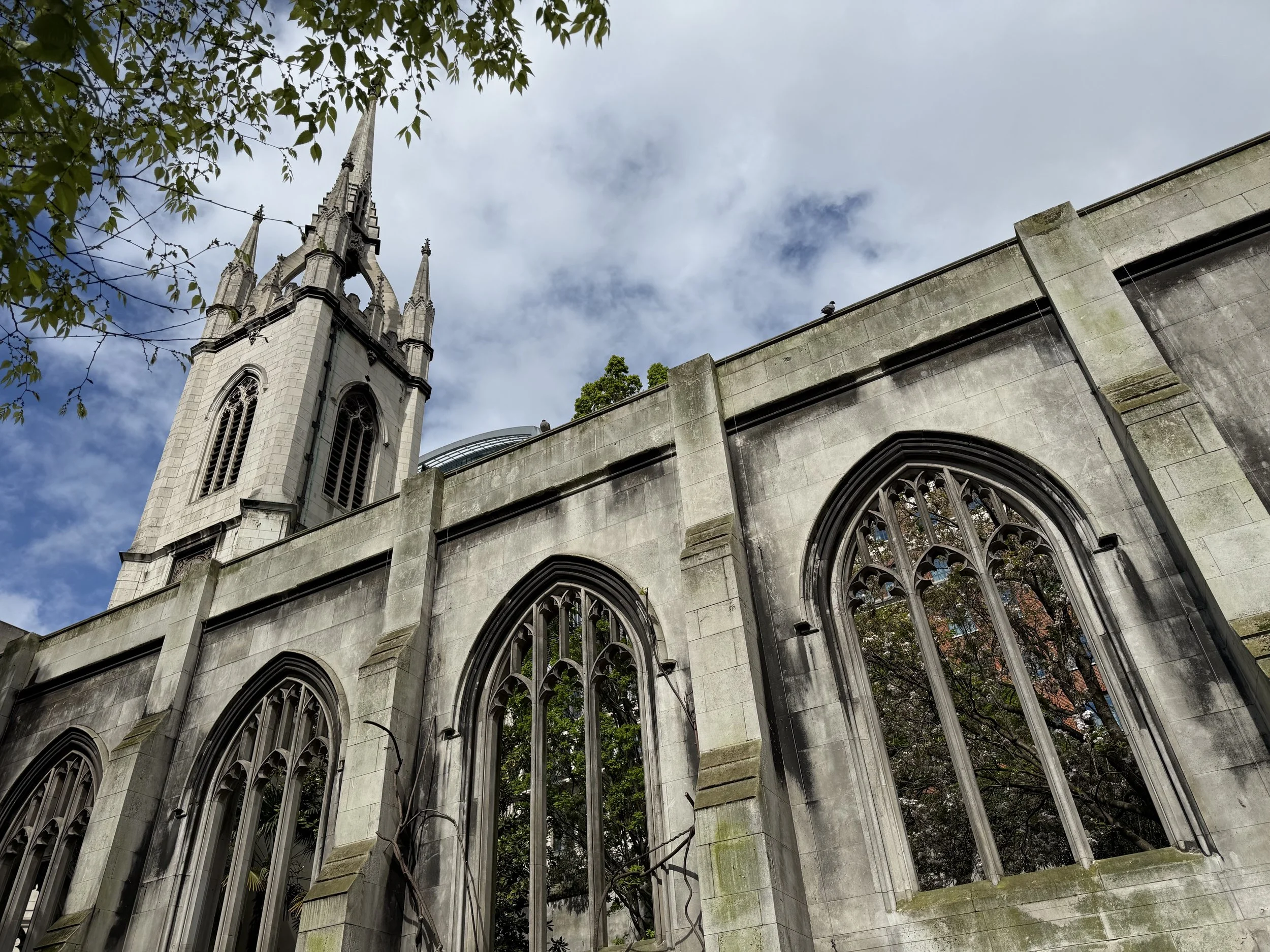
A short walk from the café brings you to one of the best-kept secrets in the whole city. St Dunstan in the East is a medieval church with a complicated history: badly damaged in the Great Fire of London in 1666, rebuilt by Sir Christopher Wren, then bombed out again during the Blitz. Rather than rebuild it a second time, the City of London turned the ruins into a public garden in the 1960s.
What that decision produced, over the decades that followed, is extraordinary. Ivy and climbing plants have grown up through the old stone walls until the walls themselves have largely disappeared behind green. Trees grow through what used to be the nave, their canopies reaching where the roof once was. The original tower and a number of the stone window frames are still standing, and they frame the garden in a way that makes the whole place feel like it belongs somewhere other than central London. It's free, always open, and the majority of people walking past on the surrounding streets have no idea it's there. Don't walk past it.
The Garden at 120, Fenchurch Street
Tip: Check the website before you make the trip over. The garden closes for private events and there's not always advance notice. We arrived to find one in progress and didn't get access. When it's open, it's completely free with no booking required. Hours and details are on their website — linked below.
On the 15th floor of the Fen Court building on Fenchurch Street, the Garden at 120 is a free rooftop garden with wisteria, roses, hydrangeas, and a long water feature, set against 360-degree views of the Thames, Tower Bridge, the Gherkin, and the Shard. Worth checking before you head over.
The British Museum
Take the Tube to Tottenham Court Road. When you come up from the station, don't just turn and walk toward the museum — just outside the exit there's a large LED art installation wrapping around the building facade that stops most people in their tracks. Take a moment with it, then follow Museum Street north. The British Museum is right at the end of it.
Eight million artifacts. Two million years of human history. All under one roof, all free. The Rosetta Stone, the Elgin Marbles, Egyptian mummies, the Sutton Hoo helmet, the Lewis Chessmen. We also paid for two ticketed special exhibitions while we were there — the Samurai exhibition and the Maui exhibition, each around £20 — and both were worth it. Give yourself a minimum of two to three hours, go in with a plan, and pick the collections or wings that matter most to you. You won't see all of it, and trying to will just leave you exhausted.
Earlier in the afternoon we'd made a wrong turn and stumbled into the London Mithraeum — a Roman temple discovered underground during construction in the 1950s. Worth knowing exists, interesting for what it is, but if you're weighing it against time in the British Museum, put the hours into the British Museum. It's not a close comparison.
End the day the way it deserves: find a pub near the museum, order a pint, and stay for the live music if there's any going.
Day Three: Covent Garden, the National Gallery & Hamilton
Covent Garden — Get There Early
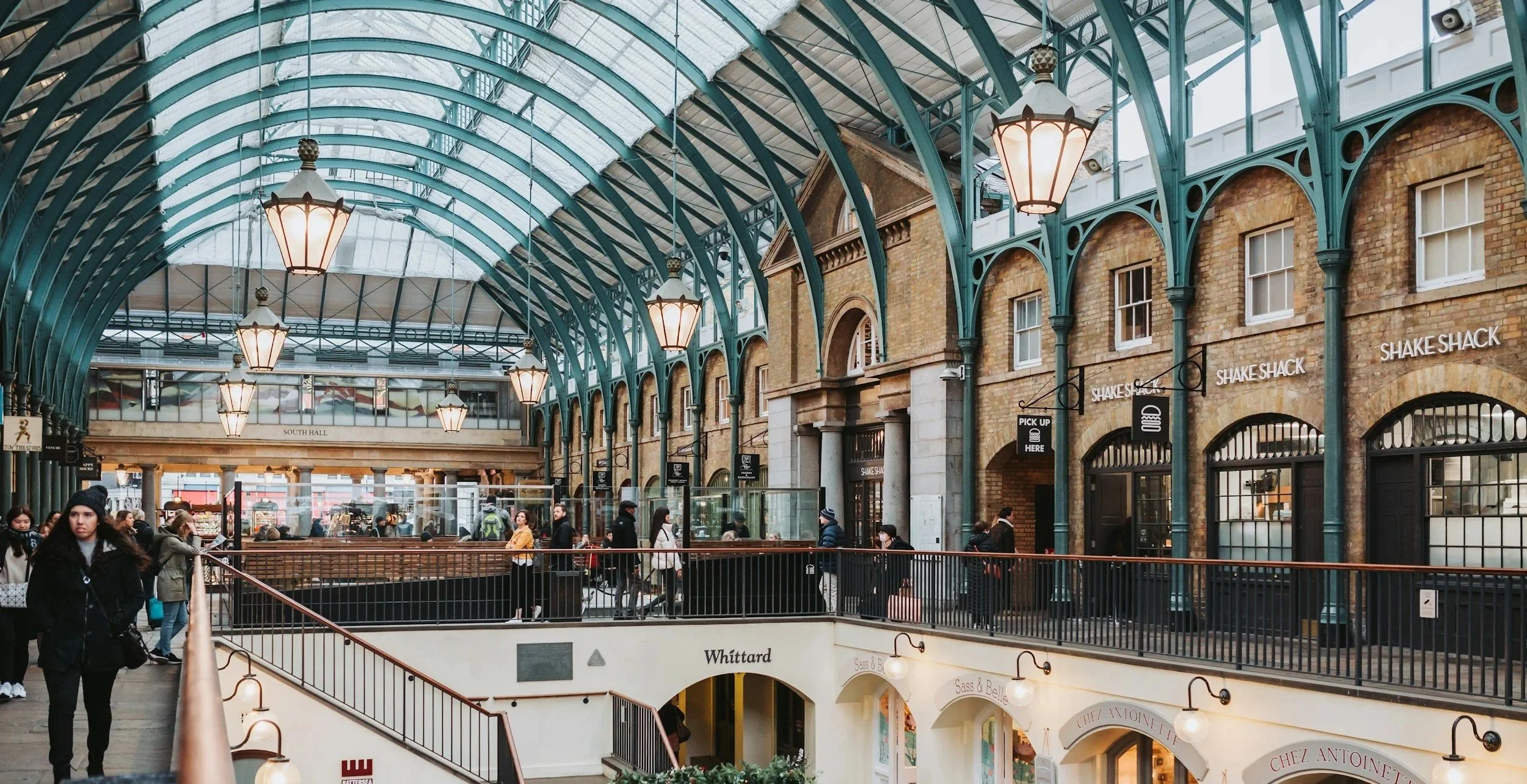
Covent Garden works best before the crowds find it. The Piazza and Market Building are open throughout the day, but the early window — vendors setting up, shopkeepers rolling back the shutters, the first performers of the morning just getting started — is when the place is at its best. The Victorian iron-and-glass market hall is beautiful at any hour, but in the early quiet it's something else.
The site has been a market and gathering place since the 17th century, originally tended by monks from Westminster Abbey before it became London's main fruit and vegetable market for hundreds of years. The market itself relocated in 1974, but the building stayed and what fills it now is worth the early alarm. The street performers here have all auditioned — Covent Garden runs formal auditions four times a year for musicians, acrobats, jugglers, magicians, and circus performers. The standard is maintained deliberately. What you're watching isn't random busking. Tip the performers.
After Covent Garden, we stopped into Pret a Manger for coffee and a moment to think. If you haven't come across Pret yet, you will within the first few hours in London. They're everywhere, the coffee is solid, and the pastries are fresh. It's an easy, affordable pit stop and there's nearly always one within a short walk wherever you are.
Pickpocket Warning: Covent Garden is one of the most heavily pickpocketed areas in London — same situation as Westminster. Bag to the front, everything zipped. The crowds around the performers are the working environment.
Chinatown & Leicester Square
From Covent Garden, Chinatown is about a ten-minute walk. London's Chinatown runs along Gerrard Street in Soho, marked at each end by ceremonial gates. It's a compact, dense neighborhood with roasted ducks in restaurant windows, bubble tea shops, bakeries, and food from across East and Southeast Asia. It carries its own energy completely separate from the streets surrounding it.
Leicester Square is a short walk from there — the center of London's entertainment district and home to several of the city's main film premiere cinemas. Worth passing through on the way south.
Trafalgar Square & the National Gallery
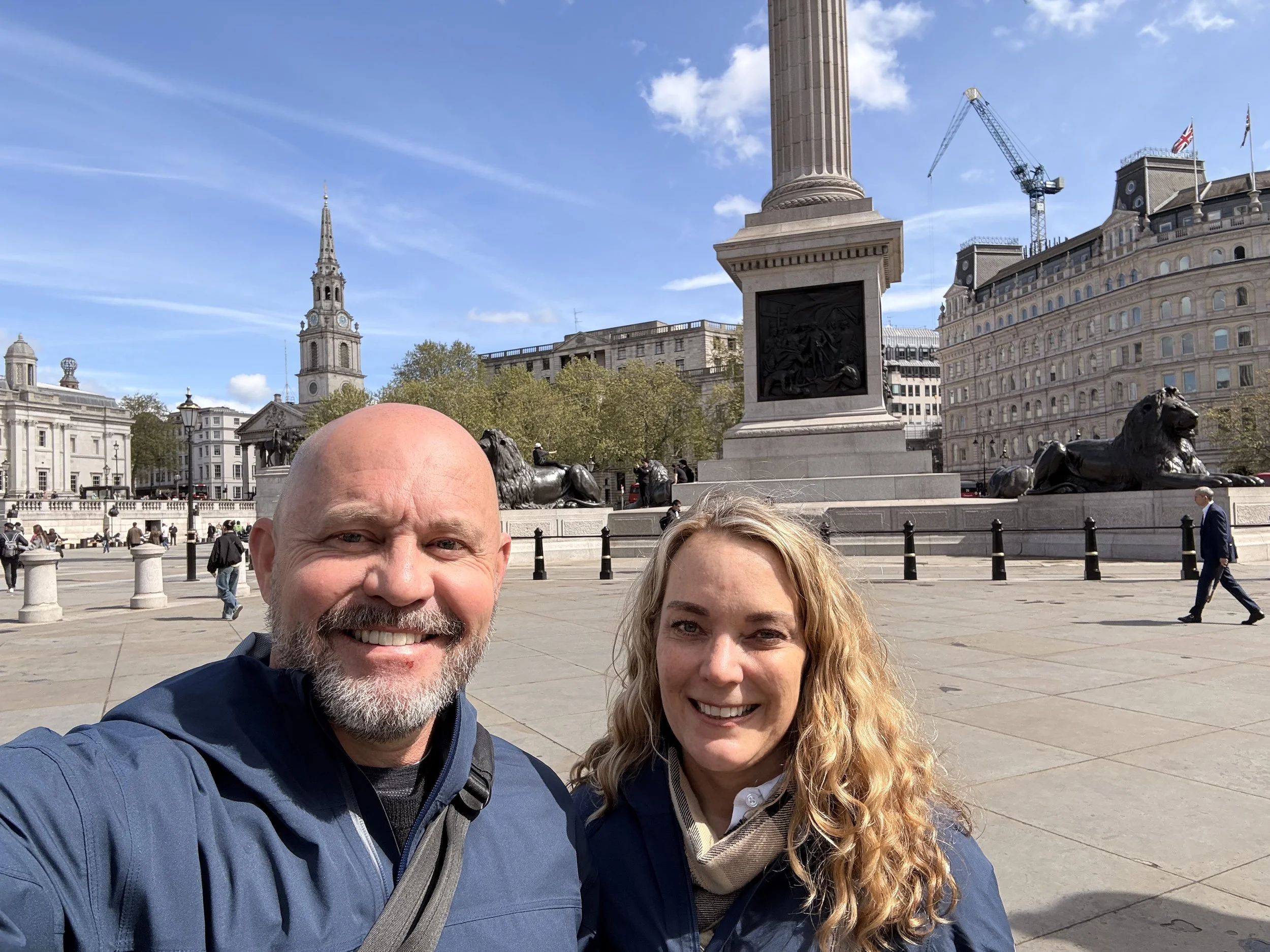
Head south from Leicester Square and Trafalgar Square opens up in front of you. Nelson's Column, 52 meters tall, the four lion sculptures at its base, the fountains running. And directly behind all of it, at the top of the wide stone steps, is the National Gallery.
Free entry. Over 2,300 paintings covering 700 years of Western European art — Van Gogh, Rembrandt, Vermeer, Turner, Monet, da Vinci. Pick a wing that appeals to you, give yourself a couple of hours minimum, and don't rush it. If there's a specific work you want to find, ask one of the staff — they'll point you straight to it and save you from wandering the wrong half of the building for 20 minutes.
London's relationship with its cultural institutions is one of the things that makes the city stand apart from almost anywhere else in the world. The National Gallery, the British Museum, the Natural History Museum, the Tate Modern, the V&A — no general admission charge at many of them. You simply walk in. That's worth a moment of appreciation every time you do it.
Dinner: The Duke of York, Victoria Street
From the National Gallery, take the Tube from Embankment to Victoria. The Duke of York on Victoria Street is a proper London pub — dark wood paneling, etched glass, a carpeted staircase, library-like alcoves along the walls, the Edwardian bones showing in everything. It sits directly next to the Victoria Palace Theatre, which made it the natural choice for dinner before the show. Good food, well-kept pints, and the pre-theatre energy in the room on a show night is its own thing.
Hamilton at the Victoria Palace Theatre
We'd seen Hamilton once in the US. This was the second time, and it was just as good — which tells you something. The Victoria Palace Theatre was completely restored and refurbished specifically to become Hamilton's London home, and the production that plays there is exceptional. The energy from the first note is unlike most shows we've seen. Book well ahead. Tickets are linked below. If it's been on your list, stop putting it off.
After the show, we met up with good friends from Crawley — people we've known for years — for dinner, drinks, and the kind of long conversation that you don't plan for and can't manufacture. They brought their puppy Lola. Honestly, it was one of the best nights of the whole trip.
Walking Guide
What's Next in the British Isles Series
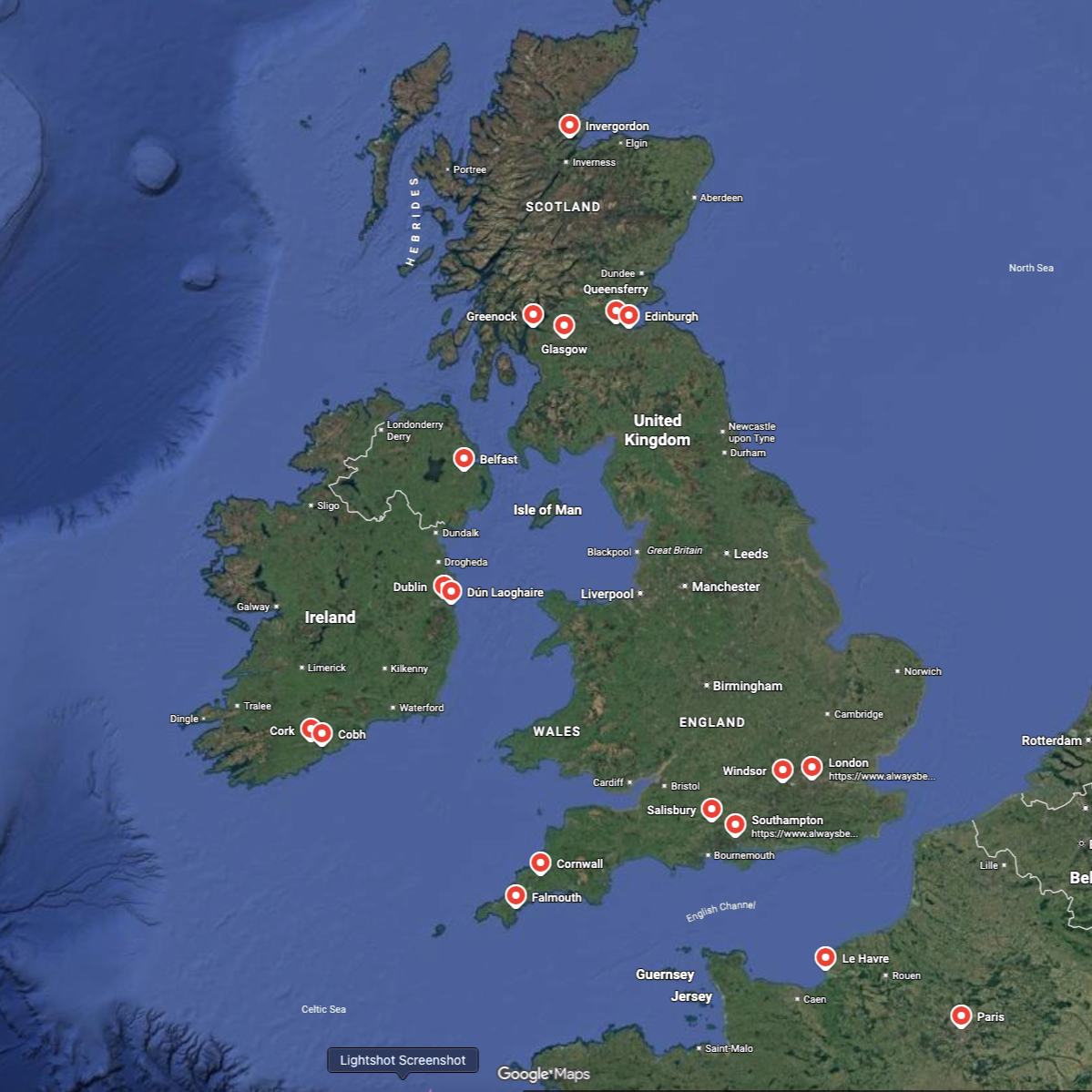
London was the first chapter. From here we headed south to Southampton and boarded the Majestic Princess for the British Isles sailing. That post is coming next in the series — and if a British Isles cruise is anywhere on your radar, you'll want it.
— Rod & Melody, Always Be Vacationing