CINQUE TERRE, ITALY
By Rod & Melody · Always Be Vacationing
We get a handful of real travel windows a year — vacation days, booked around meetings, back at our desks the next Monday. The Cinque Terre is one of the trips we spent ours on, and it earned every hour. We’re Rod and Melody, and we travel the way working people have to: full-time jobs we can’t do from a beach, a finite stack of days off, and a list of places we refuse to keep filing under “someday.” No quitting. No waiting for retirement. Just careful planning — which is what this guide is.
We first came here right after the world reopened, when Italy was still finding its footing. Masks on every train, health-pass checks at restaurant doors, capacity caps on the little harbor boats, and villages quieter than anyone who’d seen the postcards would believe. Walking into a near-empty Vernazza at golden hour was a strange kind of gift — and the rules around it were a maze. A lot has changed since. The crowds are back, the systems are new, and the prices move with the calendar. So we’ve rebuilt this guide for the Cinque Terre you’ll find today, not the one we tiptoed through back then.
Think of this as the long version — the village-by-village, trail-by-trail, what-we’d-do-differently resource you keep open while you book. Our Cinque Terre video is the short version, the one where you get to see it and hear our real takes as we go. Watch that one for the feel of the place; keep this one for the planning.
1. What the Cinque Terre Actually Is
Five centuries-old fishing villages stitched into a rugged stretch of the Ligurian coast in northwest Italy, protected together as a national park and a UNESCO World Heritage Site. From south to north they run Riomaggiore, Manarola, Corniglia, Vernazza, and Monterosso al Mare. There’s no sensible coastal road linking them — the villages are effectively car-free — and the thread that ties them together is a train line that ducks through tunnels in the cliffs and pops out at each village for a few seconds of sea view before diving back into the dark. The whole coastline sits between two gateway towns: Levanto to the north and La Spezia to the south. Distances are tiny — the train hops village to village in three to five minutes — but the terraces, staircases, and switchbacks make everything feel bigger than the map suggests.
Our take: it’s small. You can technically train through all five in an afternoon. You shouldn’t. The magic is in slowing down — one village for breakfast, another for a swim, a third for sunset.
✈ PRO TIP Don’t treat the five villages as a checklist to clear in a few hours. The people who “did all five” before lunch mostly saw train platforms. Pick two or three to settle into for a day and let the rest wait.
2. Getting There & Getting Around
Closest major airports are Pisa and Genoa, with Florence and Milan as common entry points too — all with rail links. Wherever you land, you’re aiming for one of two hubs: La Spezia Centrale to the south or Levanto to the north. Both put you one short regional train ride from the villages.
Skip the car. The villages are restricted-traffic (ZTL) zones with almost nowhere to park. If you’re driving Italy, leave the car in La Spezia or Levanto and take the train in.
The Cinque Terre Express
This is the workhorse. Regional trains run frequently in season between Levanto and La Spezia, stopping at all five villages. If you’re using single paper tickets, validate them before boarding; a pass covers you automatically.
The Cinque Terre Card (2026)
There are two versions. The Trekking Card (from about €7.50/day) covers the paid coastal trails, the village shuttle buses, and station restrooms. The Train Card, or Treno MS (from about €19.50/day), adds unlimited regional train travel between Levanto and La Spezia. Prices flex by demand band — green (low), yellow (medium), and red (high, for peak summer days, weekends, and holidays) — so the same card costs more on a busy July Saturday than on a quiet Tuesday in May. The new-for-2026 win: the Via dell’Amore is now built into both cards, with no separate ticket. Buy online to skip the station queues, which get long in summer.
The math: a single regional hop runs a few euros and, in peak season, can climb toward €10. If you expect to ride the train more than a couple of times in a day, the Train Card usually pays for itself — and it spares you the ticket-machine line every time you want to move.
Ferries
From roughly late March to early November, passenger boats connect four of the villages (not Corniglia — it has no harbor), plus Portovenere and La Spezia. A day pass runs around €40. Ferries are not included in the Cinque Terre Card and don’t run in rough weather, but seeing the villages stacked up from the water is the best photo you’ll take all trip.
The Via dell’Amore
The famous cliff path between Riomaggiore and Manarola reopened in 2024 after twelve years closed by landslides. Access is now timed and one-way — you reserve a 30-minute slot, walk from Riomaggiore to Manarola, and the park caps how many people enter at once. Book your slot when you buy your card online.
✈ PRO TIP Don’t roll up to the platform and buy a single ticket for every hop. In high season they add up fast and the machine lines are brutal — get the Train Card online before you arrive and walk straight on.
3. The Five Villages, One by One
We’ll take them south to north, the way the train numbers them.
Riomaggiore
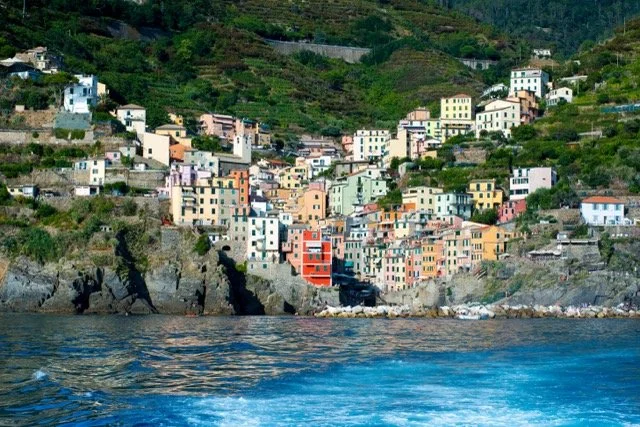
The southern gateway, and for a lot of people the first village they meet. A steep main street, Via Colombo, tumbles down to a tiny working harbor wedged between cliffs, where painted boats get hauled up the ramp and the rocks fill with people at sunset. It’s the start of the Via dell’Amore, so it gets busy — but climb a few minutes above the harbor and the crowds thin fast.
Do: walk down to the marina rocks for golden hour, the classic Cinque Terre harbor shot. Climb to the castle and the church of San Giovanni Battista for quieter views over the rooftops.
• A Pié de Mà — a cliff-edge bar perched at the Riomaggiore entrance to the Via dell’Amore, built for a slow drink with a long view.
• Harbor seafood — the village does simple fried fish and Ligurian seafood well — grab a paper cone of fritto misto and eat it on the rocks.
Our take: Riomaggiore is where the energy is highest. Beautiful, busy, and worth more than the quick stop most people give it.
✈ PRO TIP Don’t only see Riomaggiore in daylight. The harbor turns gold about an hour before sunset, after most day-trippers have trained out — stay for it.
Manarola
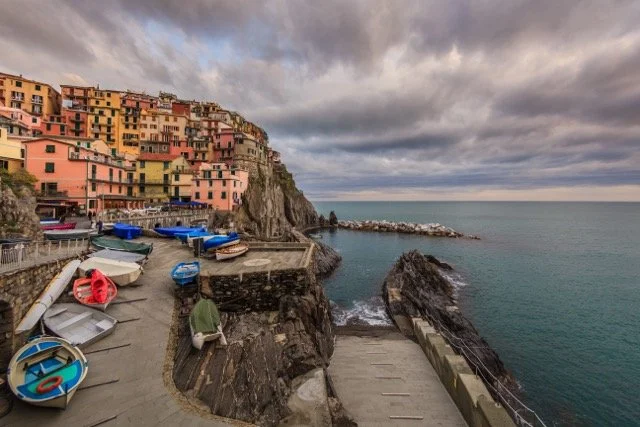
The one on the postcards. From the seaside cemetery path on the village’s western edge, you get the picture you’ve seen a hundred times: pastel houses stacked on a black rock above a turquoise cove. There’s no real beach, but people swim and cliff-jump off the rocks in the little harbor all summer. Manarola is also the heart of Sciacchetrà country — the region’s prized sweet wine, made from grapes dried on the terraces above town — and at Christmas the hillside lights up with a giant nativity scene built from thousands of bulbs.
Do: walk the flat path past the marina toward the cemetery viewpoint for the money shot, best in late-afternoon light. Swim off the harbor rocks. Climb up among the vineyards toward Volastra for a higher angle on the coast.
• Nessun Dorma — the cliffside bruschetta-and-wine bar with the view everyone wants. It’s wildly popular, so get into the digital line early or reserve ahead.
• Trattoria dal Billy — up the hill, known for seafood and a view that earns the climb.
Our take: if you only have time to fall for one village, this is the one that does it fastest.
✈ PRO TIP Don’t expect to stroll into Nessun Dorma and grab the cliff table. It’s the most wanted seat in the Cinque Terre — join the line the moment you reach the village, then go explore while you wait.
Corniglia
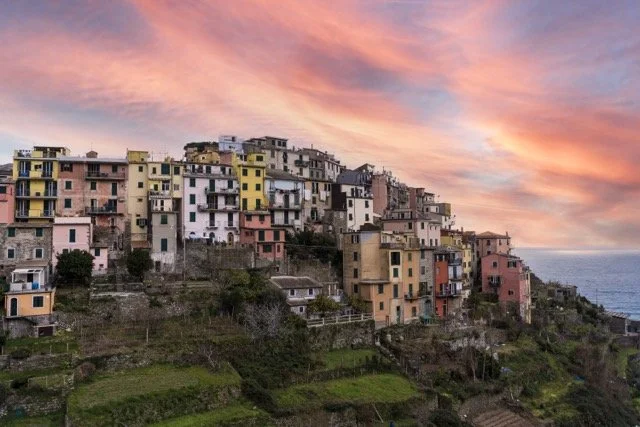
The odd one out, and our quiet favorite. Corniglia is the only village that doesn’t sit on the water — it’s perched on a headland about a hundred meters up, reached either by a shuttle bus or by climbing the Lardarina, a switchbacking staircase of roughly 380 steps from the train station. That climb filters out the casual crowds, so Corniglia stays calmer, more agricultural, more lived-in. Narrow lanes open onto a panoramic terrace, the Santa Maria belvedere, with views down the whole coast.
Do: climb (or bus) up, wander the lanes, and find the belvedere terrace at the far end of the village. Reward the effort with gelato.
• Alberto Gelateria — famous for basil and for a honey gelato that people climb all those steps to try.
• A terrace lunch — a handful of small spots serve simple Ligurian plates with a sea view and a fraction of the crowd you’d fight for below.
Our take: the village everyone skips is the one we’d tell you not to. The quiet is the point.
✈ PRO TIP Don’t write off Corniglia because it has no harbor. The 380-step climb is what keeps it peaceful — take the shuttle bus up if stairs aren’t your thing, but go.
Vernazza
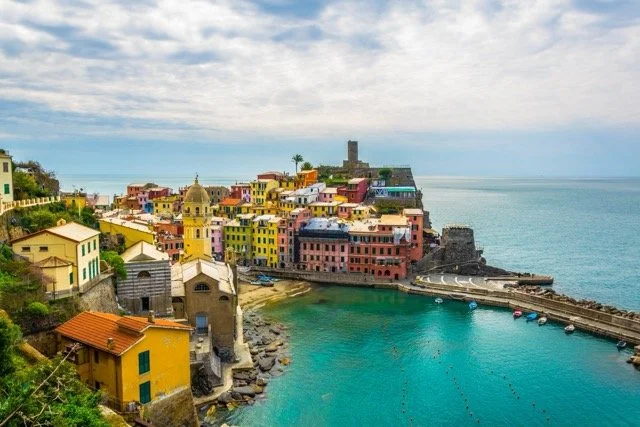
For many, the prettiest of the five, and it’s hard to argue. Vernazza is built around a small natural harbor ringed by a curve of pastel buildings, with the Doria Castle and its Belforte watchtower standing guard above and the little church of Santa Margherita di Antiochia sitting almost in the water. There’s a pocket beach behind the harbor and a couple of waterfront piazzas made for an aperitivo. Vernazza was hit hard by a catastrophic flood in 2011 and rebuilt itself — you’d never know now, but it’s part of why people here take the landscape’s fragility seriously.
Do: climb the Doria Castle tower for the postcard-from-above shot. Sit on the harbor wall with a drink at sunset. Walk a few minutes up the trail toward Corniglia or Monterosso just for the view back at the village.
• Harbor-front tables — Vernazza’s piazza spills right onto the water — the spot for seafood pasta and a glass of cold Ligurian white as the light goes.
• Anchovies and pesto — both are regional specialties, done well here.
Our take: Vernazza is the one that makes people gasp when the train doors open. Crowded for good reason — get there early or stay late.
✈ PRO TIP Don’t judge Vernazza by midday, when day-trip groups pack the harbor. Come for breakfast or stay for sunset and you’ll meet a completely different village.
Monterosso al Mare
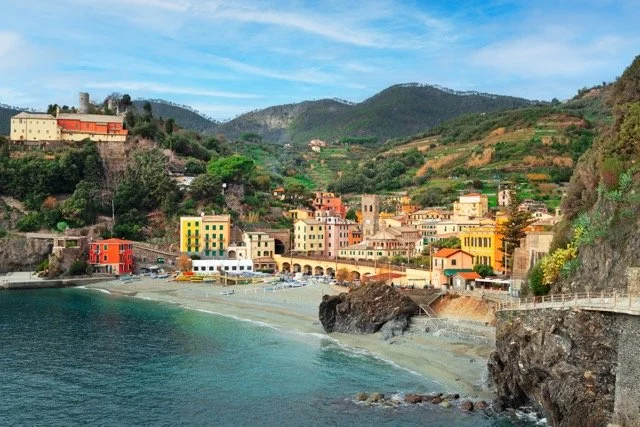
The biggest and the beachiest, and the one that feels most like a resort town. Monterosso splits in two: the historic old town, with its tangle of lanes and the church of San Giovanni Battista, and the newer Fegina side, with the long sandy beach, rows of umbrellas, and the carved Statue of Neptune holding up a terrace. If your trip needs an actual swim-and-sunbathe day, this is where it happens. Monterosso is also anchovy country — salted anchovies from these waters are a point of local pride — and lemon trees grow all over the hillsides.
Do: rent a beach chair on the Fegina sand. Wander the old town. Walk up to the Convent of the Capuchin Friars for the view. Start (or end) the Blue Trail here.
• Anchovies (acciughe) — order them marinated, fried, or baked — it’s the local dish to try.
• Focaccia and farinata — Ligurian street food at its best, straight from the village bakeries.
Our take: Monterosso is the easy one — most space, real beach, most lodging. If you want a single base with a swim built in, this is it.
✈ PRO TIP Don’t come to the Cinque Terre expecting beaches everywhere — Monterosso is the only village with real sand. If a beach day matters to you, plan it here.
4. Hiking the Trails (and What’s Open in 2026)
The coastal path that links the villages is the Sentiero Azzurro, the Blue Trail. It’s the famous one — and it’s also the one most at the mercy of the cliffs it clings to, so sections close for years after landslides. Here’s the current state, because the maps floating around online are often out of date:
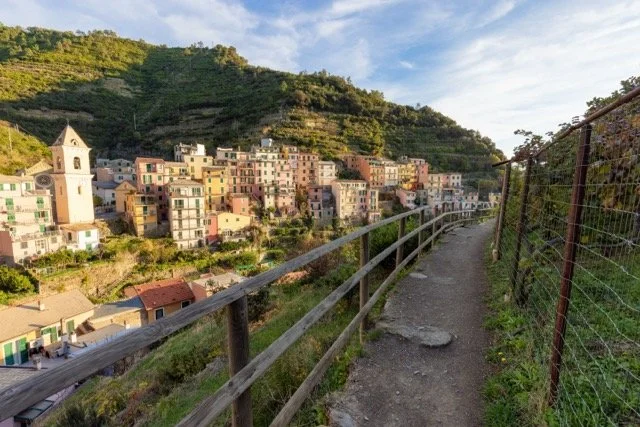
• Riomaggiore → Manarola (Via dell’Amore): open, flat, easy, and the only stretch a stroller or wheelchair can manage. Timed, one-way, and capped — book your slot. About 20 minutes.
• Manarola → Corniglia: closed. A landslide took it out, and it isn’t expected back until around 2029. Take the train, or hike the longer, steeper vineyard route up through Volastra if you want the walk.
• Corniglia → Vernazza:open. Moderate, lots of steps, around 1.5 hours, with a couple of drink stops along the way. Many hikers’ favorite stretch.
• Vernazza → Monterosso:open. The toughest of the lot — steep climbs and descents, around 2 hours — and on busy days the park makes it one-way (Monterosso → Vernazza) from 9 a.m. to 2 p.m.
Beyond the Blue Trail, the higher inland trails are free, quieter, and arguably more beautiful. The ridge walk from Monterosso to Levanto via Punta Mesco and the sanctuary trails above the villages reward the climb with views the coastal path can’t match.
✈ PRO TIP Don’t trust a trail map you found weeks ago. Conditions change after every big rain — check the official park status the day before and the morning you hike, and keep a train-based plan B.
✈ PRO TIP Don’t hike these in sandals. The park bans flip-flops and smooth-soled shoes on the paid trails, with fines starting at €50 — and the steps are steep and slick. Bring shoes with grip.
5. When to Go
Late spring (May into early June) and fall (September into October) are the sweet spots — warm enough to swim, stable enough to hike, and lighter on crowds than the July–August peak. Midsummer is hot, bright, and busy, with the card priced in its highest demand band and the trains and trails at their fullest. Winter, roughly November to mid-March, is the quiet secret: many trails go free because there aren’t enough visitors to check tickets, the villages exhale, and you’ll have the harbors nearly to yourself — but some boats and businesses close, and rain can shut trails. When we first visited, the post-pandemic lull handed us that off-season hush during what should have been a busy stretch. You can chase a milder version of that feeling by going at the shoulders of the season instead of the middle.
✈ PRO TIP Don’t default to mid-July or August. The shoulder months give you the same villages with cooler weather, lower card prices, and room to breathe on the trails.
6. Where to Stay
Two real choices: sleep inside the park, or base yourself in a gateway town and train in.
• In the villages: Monterosso has the most rooms and the only real beach, which makes it the easiest in-park base. Vernazza is the most charming place to wake up. Manarola and Riomaggiore are smaller and atmospheric. Corniglia is the quietest, if you don’t mind the climb. Expect village prices to run higher and rooms to be small and stair-heavy — these are medieval fishing villages, not resorts.
• The gateways: La Spezia to the south is the practical, better-value base — a real working city with more hotels, easier parking, and trains into the villages every few minutes. Levanto to the north is mellower, has its own beach, and makes a lovely low-key alternative.
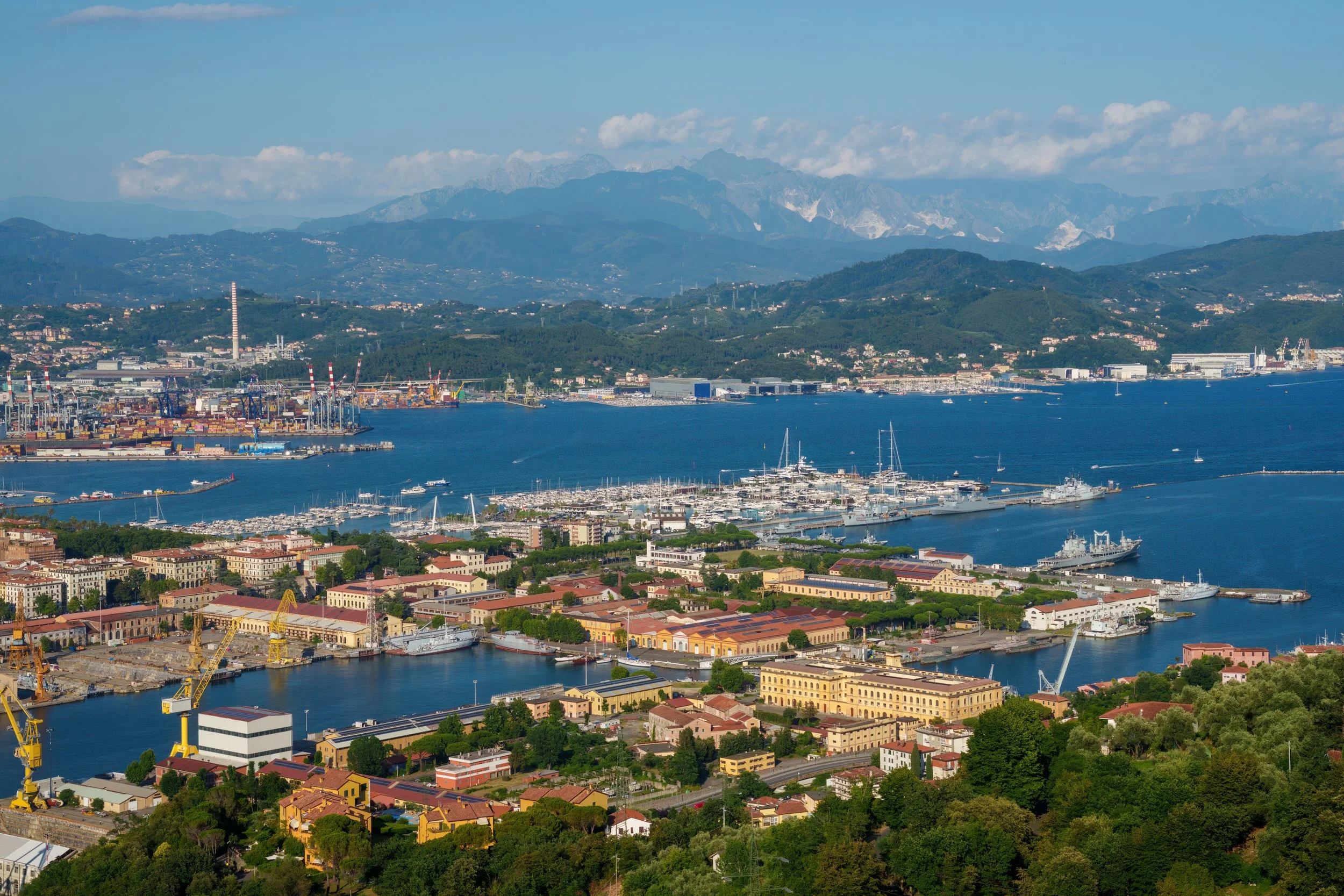
La Spezia, Italy
We book our own stays for these trips — no travel agent, no waiting on anyone — and we keep the hotels, apartments, and packages we’d actually book in our Expedia Travel Shop so you can price them for your own dates: [EXPEDIA TRAVEL SHOP URL].
✈ PRO TIP Don’t assume you have to sleep in the villages. Basing in La Spezia or Levanto often costs less, parks easier, and still puts you in any village in minutes — the train is that good.
7. What to Pack
The Cinque Terre punishes the wrong shoes and rewards a light bag. A few things we wouldn’t come without:
• Real trail shoes or sturdy sneakers with grip — non-negotiable, given the footwear rule and the staircases.
• A small daypack and a refillable water bottle (there are public fountains to refill at).
• Packing cubes, because village rooms are tiny and the stairs are many.
• A power bank — you’ll burn through battery on photos and train apps.
• A swimsuit and a quick-dry towel for the harbor swims and Monterosso’s beach.
• Sun protection — the coast is bright and shade is scarce on the trails.
We keep the specific gear we travel with in our Amazon travel storefront, sorted by category so you can grab what you need: https://a.co/d/08VZ58vS.
On staying connected: rather than hunting for Wi-Fi or fighting roaming charges, we run an eSIM so the phone just works the minute we land — handy when you’re booking a Via dell’Amore slot from a train platform. We use Holafly: [HOLAFLY eSIM LINK].
✈ PRO TIP Don’t pack the cute sandals as your only shoes. Between the trail rules and the staircases, you’ll want grip every single day — bring real shoes and save the sandals for the beach.
8. What to Eat & Drink
This is Liguria, the birthplace of pesto, and the food leans bright, green, and coastal.
• Pesto alla genovese — basil, pine nuts, garlic, Parmigiano, and Ligurian olive oil, classically over trofie or trenette pasta — sometimes with potatoes and green beans tossed in.
• Focaccia and farinata — pillowy olive-oil focaccia and chickpea-flour farinata are the regional street foods; buy them by weight and eat them warm.
• Anchovies (acciughe) — Monterosso’s salted anchovies are a regional point of pride — try them even if you think you don’t like anchovies.
• Seafood — fritto misto, mussels, and the day’s catch, simply done.
• The wines — crisp Cinque Terre DOC whites and Vermentino with lunch; Sciacchetrà, the rare sweet wine from dried grapes, as a splurge dessert pour.
✈ PRO TIP Don’t fill up on the first harbor-side sit-down lunch you see. Graze instead — focaccia here, fried fish there, gelato in Corniglia — and you’ll taste more of the coast for less.
Quick-Tips Recap
• Buy the Cinque Terre Train Card online before you arrive — it covers the trains, the trails, and now the Via dell’Amore.
• Book your Via dell’Amore time slot in advance — it’s timed, one-way, and capped.
• Check official trail status the day before and the morning of; Manarola–Corniglia is closed until roughly 2029.
• Wear grippy shoes — sandals and smooth soles are banned on the paid trails, with €50+ fines.
• Skip the car; base in La Spezia or Levanto, or sleep in the villages and travel light.
• Go in the shoulder season (May–June, Sept–Oct) for cooler weather, lower prices, and fewer crowds.
• Don’t rush all five — pick two or three a day and slow down.
That’s the long version — the one to keep open while you book. For the short version, the one where you get to see it and hear our real takes, watch our Cinque Terre walk-through up on the channel. Wherever you start, don’t try to rush all five. Slow down. The coast rewards it.